Everyday Aromatherapy for Stress Relief: Safe Oil Routines
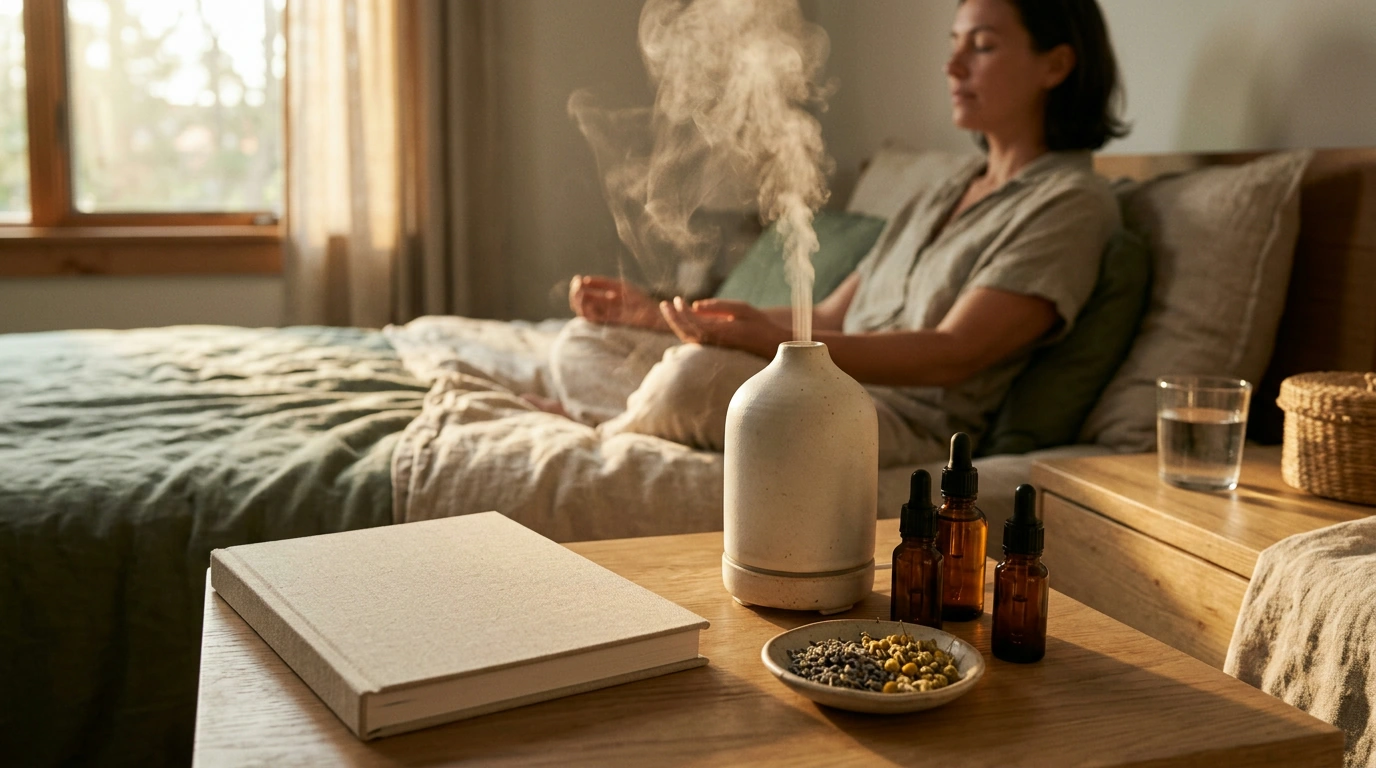
Stress Relief with Aromatherapy: How Essential Oils Fit Into Real Life
Stress can show up as tight shoulders, restless sleep, racing thoughts, and that “stuck” feeling in the chest when breathing turns shallow. Aromatherapy uses plant-derived essential oils to support calmer moments through scent and simple, repeatable rituals that help the nervous system shift gears. Used thoughtfully, it can become a steady, low-effort companion to foundational supports like sleep, movement, hydration, and connection.
If you prefer a structured, step-by-step reference, the Aromatherapy for Stress Relief: A Complete Guide to Using Essential Oils for Stress Reduction is a convenient way to keep routines, dilution notes, and blend ideas in one place.
How aromatherapy supports calmer moments
- Scent signals travel quickly from the nose to brain areas involved in emotion and memory, which can influence perceived stress and help create a “safe, settled” association over time.
- Aromatherapy works best as a supportive tool alongside basics like sleep, movement, hydration, and social connection—not as a replacement for them.
- Consistency matters more than intensity. Short, repeatable rituals (the same scent, the same breathing pattern, the same time of day) often feel more grounding than occasional strong sessions.
For many people, a small ritual is the point: turning on a diffuser, uncapping a bottle for a gentle inhale, or applying a diluted roll-on can become a cue that tells the body it’s okay to soften.
Essential oils commonly used for stress and tension
These oils are popular for relaxation and “unclenching” after a long day. Personal preference matters: a scent you dislike can feel agitating rather than soothing.
- Lavender: Widely studied for relaxation and sleep support; often a good starting point for beginners.
- Bergamot: Bright, citrus-floral aroma; commonly used for mood support. For topical use, choose bergapten-free/FCF bergamot to reduce phototoxic risk.
- Roman chamomile: Gentle, calming profile; often used for winding down and irritability.
- Frankincense: Resinous, grounding scent; frequently paired with slow breathing practices.
- Ylang ylang: Sweet floral; can feel soothing but may be overwhelming for some—start with small amounts.
- Clary sage: Often used for easing tension; avoid during pregnancy unless cleared by a clinician.
When choosing, aim for a “yes” reaction: pleasant, not overpowering, and easy to imagine using multiple times per week.
Safe use basics: diffusion, topical, inhalation
- Start low and go slow: Use fewer drops than suggested on many labels; increase only if needed.
- Diffusion: Aim for short sessions (about 15–30 minutes), then take breaks; ventilate the room.
- Direct inhalation: Add 1–2 drops to a tissue or personal inhaler; avoid contact with eyes and mucous membranes.
- Topical use requires dilution: Use a carrier oil like jojoba, sweet almond, or fractionated coconut oil.
- Patch test: Try new blends on a small area and wait 24 hours to check for irritation.
- Kids and pets: Keep oils away from children and animals; some oils can be unsafe for them, especially in enclosed spaces.
Quick dilution guide for stress-relief blends
| Use case | Dilution | Essential oil amount | Carrier amount | Notes |
|---|---|---|---|---|
| Sensitive skin / first-time use | 0.5% | 1 drop | 2 tsp (10 mL) | Best for testing new oils |
| Daily body oil | 1% | 2 drops | 2 tsp (10 mL) | Good for neck/shoulders |
| Targeted tension areas | 2% | 4 drops | 2 tsp (10 mL) | Avoid broken skin |
| Bath (safer approach) | Pre-dilute | 2–4 drops | 1 tbsp (15 mL) carrier oil or unscented bath gel | Do not add undiluted oils directly to water |
For additional safety context and what research does (and doesn’t) show, see the National Center for Complementary and Integrative Health overview: NCCIH — Aromatherapy. A practical consumer-friendly review is also available from Mayo Clinic — Essential oils: Do they work?.
Simple routines for different stress moments
Fast reset (2 minutes)
Add 1 drop lavender or bergamot to a tissue, hold it a few inches from the nose, and breathe slowly: inhale for 4 counts, exhale for 6. Keep the scent faint—barely there tends to feel more settling than intense.
Desk-friendly “focus calm”
Diffuse a low-dose blend (for example, bergamot + frankincense) for 15 minutes, then pause for at least 30 minutes. If the office is noisy or distracting, pairing scent with steady sound can reinforce the cue—comfortable earbuds can help create a small boundary for focus breaks, like the HiFi Dynamic Driver Earbuds.
Muscle unwind (after work)
Bedtime wind-down
Blend ideas with a “less is more” approach
Small “reset stations” can also help the ritual stick. Keeping tissues, a carrier oil, and a closed container nearby makes it easier to follow through; a neat countertop or desk accessory like the Natural Marble Tissue Box with Gold Accents can keep the routine feeling intentional rather than cluttered.
When to be cautious and when to get help
A structured guide for building a stress-relief practice
If you want a single resource to keep these steps organized, the Aromatherapy for Stress Relief: A Complete Guide to Using Essential Oils for Stress Reduction can act as a simple reference as you refine what works best day to day.
FAQ
What essential oil is best for stress relief?
Lavender is a common first choice because it’s widely used for relaxation and sleep support. The best option depends on your scent preference, whether you want daytime calm or bedtime support, and safety considerations—try 1–2 oils and track how you feel.
How long should an essential oil diffuser run for relaxation?
Short sessions are usually enough: about 15–30 minutes, then take a break and ventilate the room. Stop or reduce the dose if you notice headaches, nausea, or irritation.
Can essential oils be applied directly to the skin?
Direct (“neat”) application is generally not recommended for most oils. Dilute in a carrier oil, patch test first, and use extra caution for sensitive skin, children, and anyone with relevant medical conditions.









Leave a comment