AI-Assisted Yoga Nidra Scripts: Structure, Tone & Pacing
Deep Rest, Smartly: A Practical Digital Guide to Writing Yoga Nidra Scripts with AI Assistance
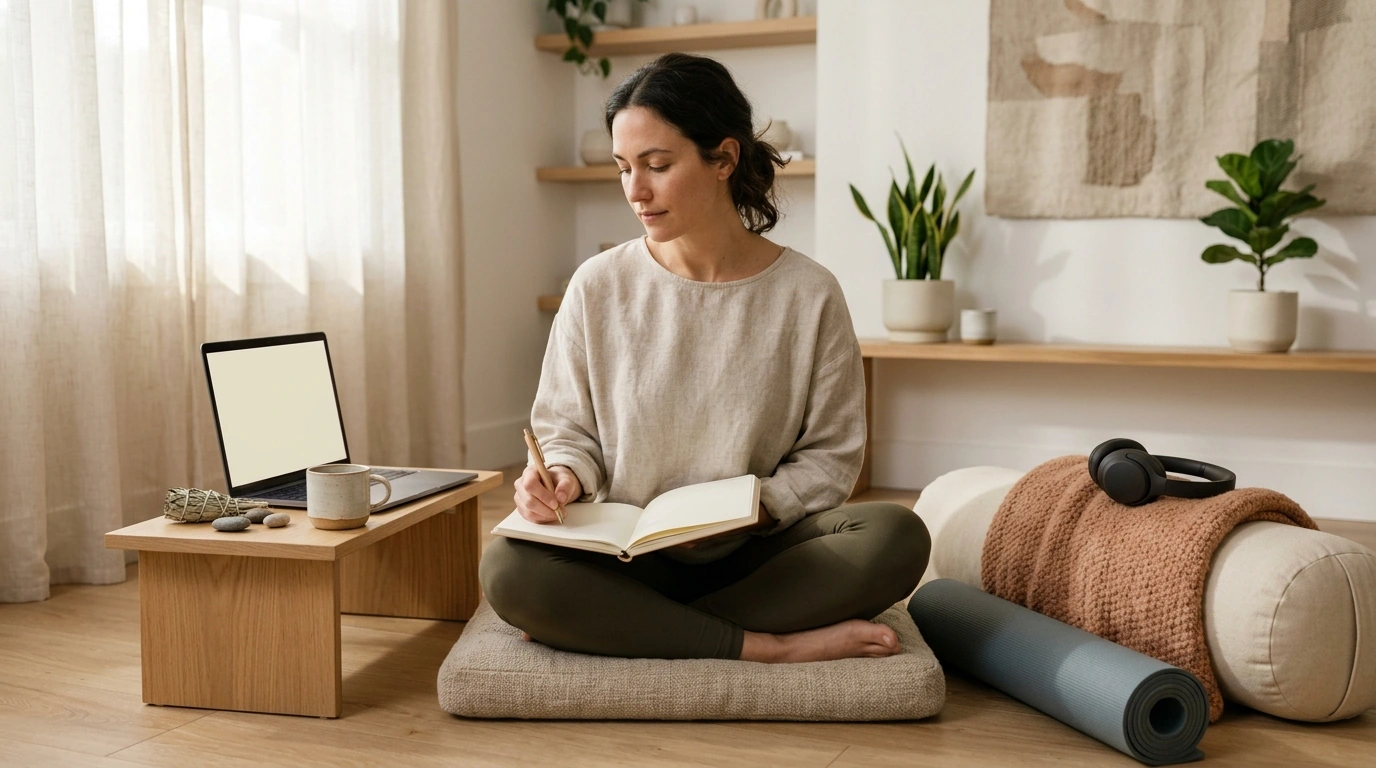
Yoga Nidra can feel effortless for students—yet behind the scenes, the most soothing sessions are built on consistent structure, steady pacing, and language that doesn’t overreach. When your cues are clear and your transitions are gentle, listeners can soften into rest without getting pulled back into “doing it right.”
Deep Rest, Smartly: AI Yoga Nidra Scripts digital guide is designed for teachers, coaches, and wellness creators who want a practical way to draft and refine guided relaxation scripts faster—while keeping a human tone, consent-forward options, and safety-minded boundaries. It supports your voice rather than replacing it, so your sessions still sound like you.
What This Digital Guide Helps Create
- Complete Yoga Nidra-style scripts with a reliable sequence: arrival, intention, body awareness, breath, imagery, quiet rest, and closing
- Short and long sessions (roughly 10–45 minutes) with pacing cues that prevent rushing the most restorative segments
- Theme-based variations for sleep, stress release, recovery days, focus resets, and gentle emotional regulation
- Versions tailored for live teaching, audio recording, video, or written self-practice
Who It’s For
- Yoga teachers who want a repeatable method for drafting and refining scripts between classes
- Meditation guides, breathwork facilitators, and studio owners building new audio libraries
- Therapist-adjacent wellness professionals who prefer careful, non-clinical language and clear boundaries
- Content creators producing paid downloads, memberships, or companion practices for courses
What’s Inside: Core Building Blocks
Yoga Nidra is often most effective when the listener knows (implicitly) what comes next. The guide leans into a stable architecture while leaving plenty of room for your themes, beliefs, and style. You’ll find tone controls that work for secular audiences, spiritual spaces, nature-based language, minimalist cues, or more story-forward delivery.
It also emphasizes pacing: where to slow down, where to repeat a phrase to support drifting, and how to include silence without making a recording feel “empty.” If you’re building wellness content, it helps to remember that mindfulness and meditation practices are generally considered safe for many people, but experiences vary; the National Center for Complementary and Integrative Health (NCCIH) summarizes potential benefits and safety considerations in a balanced way. For stress-focused sessions, the American Psychological Association (APA) outlines how stress can affect the body—useful context when writing calming, grounded cues.
Common Script Segments and What They Do
| Segment | Purpose | Notes for a Calm Delivery |
|---|---|---|
| Arrival & settling | Signals safety and stillness | Use simple sensory anchors; avoid too many instructions at once |
| Intention (sankalpa) option | Gives a soft internal direction | Keep it short; offer opt-in language for those who prefer to skip |
| Body awareness rotation | Steadies attention and reduces mental chatter | Use a consistent order; repeat key phrases to support drift |
| Breath awareness | Builds rhythm and ease | Avoid forcing breath depth; invite natural breathing |
| Imagery or felt sense | Encourages the relaxation response | Choose neutral or comforting scenes; avoid triggering themes |
| Quiet rest | Allows integration | Add timing cues for recordings; honor silence |
| Closing & reorientation | Returns to alertness safely | Include gentle movement options; invite hydration and grounding |
A Simple AI-Assisted Workflow That Still Sounds Like You
- Start with audience and constraints: duration, setting (bedtime vs. studio), and sensitivity level (gentle/neutral).
- Draft in modules rather than one long block, so each section can be refined for tone and pacing without breaking the whole session.
- Do a “softness pass”: swap harsh verbs, shorten complex sentences, and add permission-based options (for example, “if you’d like…”).
- Do a “safety pass”: avoid medical claims, reduce emotionally activating imagery, and add alternatives for those who prefer eyes open.
- Finish with read-aloud editing: mark pauses, check timing, and remove repetition that feels distracting rather than lulling.
For creators who record at home, a clean listening experience matters—especially when your pacing relies on quiet pauses and subtle cues. If you want a dedicated audio accessory, HiFi Dynamic Driver Earbuds can help you monitor recordings for breath noise, background hum, and volume consistency before publishing.
Ways to Customize Sessions Without Losing Structure
- Time scaling: Keep the same sequence and expand only 2–3 segments (often body rotation, imagery, and quiet rest) to reach longer durations.
- Audience adaptations: Beginner-friendly sessions benefit from more orientation cues; advanced sessions can use fewer words and more silence.
- Theme overlays: Sleep, self-compassion, nervous system downshifting, recovery, or focus can be layered primarily through imagery, tone, and the closing.
- Delivery adaptations: Written scripts for reading, audio scripts with pause markers, and live versions with optional “branches” if the room needs more grounding.
Quality Checks Before Sharing or Selling a Guided Practice
Product Details at a Glance
Quick Reference
| Item | Details |
|---|---|
| Product | Deep Rest, Smartly: AI Yoga Nidra Scripts | Digital Guide for Creating Guided Relaxation & Meditation eBook with AI Prompts |
| Price | $10.99 USD |
| Type | Digital guide |
| Use case | Drafting and refining guided relaxation scripts with consistent structure |
Good Fits and Not-So-Good Fits
FAQ
Is this guide suitable for beginners who have never written a Yoga Nidra script?
Yes. It offers a clear structure, a modular approach for drafting section-by-section, and editing checks that make it easier to refine tone and pacing over time. Reading your script aloud and testing short sessions first helps build confidence quickly.
Can the scripts be used for recordings and paid downloads?
It’s built to support scripts for live classes, audio, video, and written practices, including content intended for paid libraries. Before selling, review the product page terms and do a final human edit to confirm clarity, safety language, and a natural delivery.
How long should a guided relaxation session be for sleep support?
A 10–20 minute session often works well for a quick downshift, while 20–45 minutes can support deeper settling when pacing stays unhurried. For bedtime recordings, consider a gentle closing or a softer fade-out approach that doesn’t jolt listeners into alertness.









Leave a comment